Book a FREE Consultation
Fill in the form and we will be in touch to discuss your needs in more detail, and arrange your consultation with one of our surgeons.

Fill in the form and we will be in touch to discuss your needs in more detail, and arrange your consultation with one of our surgeons.


Both use precise pulses of UV light in a surgical procedure which helps to treat shortsightedness, longsightedness and astigmatism. But what are the differences, and which is the right treatment for you?
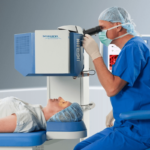
LASIK (laser-assisted in situ keratomileusis) is the most popular treatment option due to its quicker recovery times. During LASIK treatment, a very thin flap is created on the surface of the eye. This flap is then lifted and a laser is used to correct your vision. The flap, once repositioned, then almost immediately adheres to the underlying corneal tissue and begins to heal.
During a SURFACE treatment, the layer of cells on the surface of your eyes (known as the epithelium) are either gently displaced or removed, giving the surgeon access to the layer of your cornea which is treated with the laser. A protective contact lens is then applied to help your eyes heal, which is removed three or four days later. The recovery time for a SURFACE treatment is longer than with LASIK, but may be a better choice if you have thin corneas or a medical condition that makes LASIK impossible.
Below, we compare some of the key differences between LASIK and SURFACE laser eye surgery. However your surgeon will discuss both treatments with you at your initial consultation so you can make an informed decision about which is the appropriate option for you.
| LASIK | LASEK | |
| Return to useful vision | 1 – 2 days | 4 – 7 days |
| Post-op discomfort | 1 – 8 hours (if any) | 2 – 3 days |
| Time of work | 1 – 2 days | 3 – 4 days |
| Treatable prescription for myopia (shortsightedness) | Up to -10.00D | Up to -10.00D |
| Treatable prescription for hyperopia (longsightedness) | Up to +6.00D | Up to +6.00D |
| Anaesthetic used | Eye drops | Eye drops |
| Treatment time | 10 mins per eye | 10 mins per eye |
| Both eyes treated together | Yes | Yes, but dependent on the advice of your surgeon |
| Steroid eye drops use after treatment | 1 week | Up to 4 weeks |
When it comes to deciding which treatment would be the most appropriate for you, the best option is always to book a no-obligation consultation so that you can discuss each treatment with your surgeon.
They will assess your eyes and vision, talk you through each treatment type, and advise you on which would be the most effective for you. At this point you can also ask any questions you might have, to ensure you are able to make an informed decision.
If you’re considering laser eye correction and would like to meet with an opthamologist to discuss your options further, give our friendly patient advisors a call on 01204 387467.
All eye surgical procedures carry a level of risk including not obtaining the desired outcome, through to varying levels of visual loss. Your eye surgeon will discuss the risks and benefits, including ones specific to your circumstances, at the time of your pre-operative consultation.